The process of buying property in Turkey does not always follow the same steps. Much depends on the type of property you are purchasing, its current stage of development, who the seller is, and how the payment terms are structured.
Buying a completed apartment on the secondary market from a private owner differs from purchasing an apartment in a new development from a construction company. Properties purchased at an early stage of construction also have their own specific considerations, as the project is still under development.
Therefore, before discussing the steps of the transaction, it is important to clarify several key points: the status of the property, the seller, the payment terms, and the point at which ownership is transferred to the buyer.
Buying Completed Property on the Secondary Market
When purchasing a completed apartment from a private owner, the transfer of ownership is generally more straightforward. If the documents are in order and both parties are ready to proceed, the buyer and seller can complete the transfer of ownership directly through the Tapu office.
In practice, when buying secondary-market property, it is particularly important to check the property, documents, and transaction terms in advance, as well as agree on the payment procedure and the point at which ownership will be transferred. For the buyer, it is generally important that the transfer of ownership and final payment are arranged in a safe and transparent manner.
Buying Completed Property from a Developer
When the seller is a construction company, the terms of the transaction may be more flexible. Depending on the project, the developer may offer full payment, an installment plan, or another agreed payment structure.
This can be convenient for the buyer, but an installment plan may mean that a certain period of time passes between the purchase and the transfer of ownership. Therefore, in such transactions, it is important to assess not only the price and payment terms, but also the reliability of the company, its track record, the legal structure of the transaction, and the terms of the contract.
Buying Property Under Construction
When an apartment is purchased in a project that is still under construction, the process is more complex. The buyer may enter into an agreement at an early stage, when the property itself has not yet been completed, while ownership is registered depending on the stage of the project and the specific transaction structure.
In such cases, it is particularly important to understand:
- what exactly is being purchased;
- what stage the project is currently at;
- who the seller and developer are;
- what construction deadlines apply;
- how payments are made;
- when and under what conditions ownership is registered;
- what happens if the project timeline or terms change.
An early purchase may offer more flexible terms or potentially a more attractive price, but it also requires a more thorough review of the project and the developer.
Why It Is Important to Know Who You Are Dealing With
For the buyer, it is not only the property itself that matters, but also the party selling it.
A transaction with a private owner and a purchase from a construction company involve very different circumstances: they have different payment models, contractual relationships, and risks that need to be considered.
When buying from a developer, we recommend examining the company separately, including its completed and ongoing projects, contract terms, and payment structure. This is one of the reasons why professional assistance is particularly valuable when selecting and reviewing a property.
Our clients do not have to navigate all these issues on their own. We assess not only the property itself, but also the purchase terms, project status, and the party involved in the transaction, so that the buyer understands exactly what they are purchasing and under what conditions.
Installment Plans: Convenient, but the Terms Must Be Considered Alongside the Risks
An installment plan can make a property purchase more accessible and is particularly common in projects where the seller is the developer. However, an installment plan is not simply a convenient way to spread payments over time.
The buyer needs to understand what happens to ownership before the full purchase price is paid, what obligations each party has, when the TAPU is transferred, what happens if the payment schedule is not met, and what conditions apply if the agreement is changed or terminated.
Therefore, when purchasing property with an installment plan, it is important to assess not only the initial payment and duration of the payment schedule, but also the reliability of the developer and the terms of the contract.
This is where practical experience becomes particularly valuable. The same discount or identical installment structure can have very different implications depending on the project, the company, and the specific terms of the transaction.
Legal Considerations When Buying Property in Turkey
Turkish legislation provides legal protection for the parties to a transaction, and in the event of a dispute, the court considers not only the wording of the contract but also the applicable legal provisions. However, this does not mean that the contract itself can be overlooked. The more precisely the rights, obligations, deadlines, payment terms, and consequences of non-compliance are defined, the less room there is for disputes.
The official TKGM also publishes guidance for foreign buyers and states that procedures depend on the specific transaction. Transactions involving foreign buyers are subject to an established registration and transfer procedure.
Before each transaction, we carefully review all necessary documents, information about the property, and the terms of its purchase. We take full responsibility for our work and guarantee the transparency and proper handling of the transaction on our side. If our review identifies any risks, restrictions, inconsistencies, or other matters that may be relevant to the buyer, we inform the buyer before a decision is made and explain exactly what needs to be considered.
Our experience allows us to see not only the obvious characteristics of a property, but also transaction details that may not always be apparent to the buyer. We support our clients throughout the process until the transaction is fully completed and ensure that no issue that could affect their interests is overlooked.
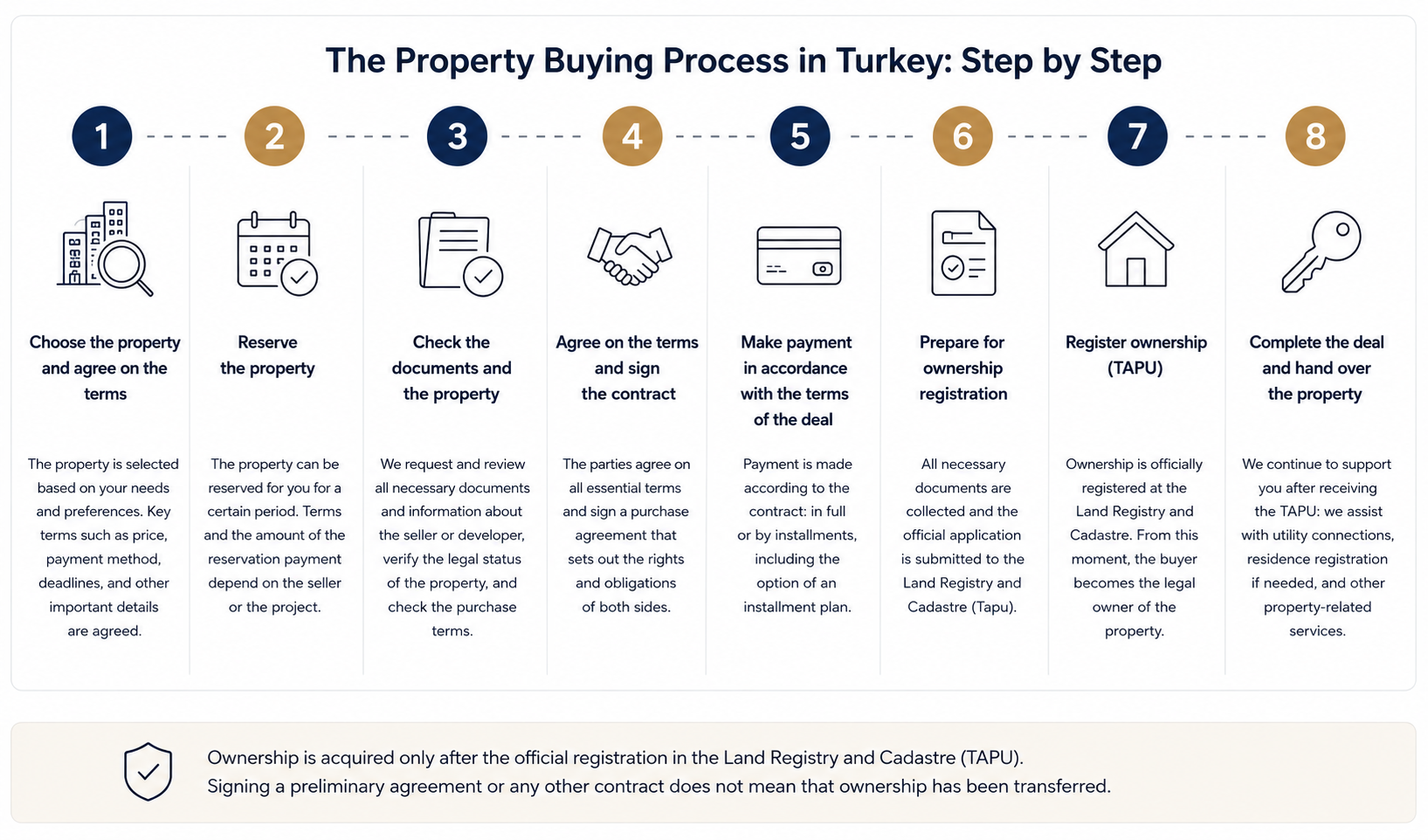
Step-by-Step: The Property Buying Process
1. Choosing a Property and Agreeing on the Terms
Once the property has been selected, the buyer agrees with the seller on the price, payment terms, transaction timeline, and other key conditions of the purchase. Before moving to the next stage, it is important to make sure that all agreements are clear and properly documented.
2. Reserving the Property
Depending on the project and the terms of the transaction, the property may be temporarily reserved for the buyer. At this stage, the agreed terms are confirmed and, where applicable, a reservation payment is made.
3. Checking the Property and Documents
Before signing the contract, the documents relating to the property, information about the seller or developer, the legal status of the property, and any potential restrictions are checked. This helps identify potential issues and risks before the transaction is completed.
4. Signing the Contract
After the documents have been reviewed, the parties sign the relevant agreement, which sets out the price, payment schedule, deadlines, obligations of the parties, and other terms of the transaction. The content of the contract depends on the type of property and the purchase structure.
5. Payment
The buyer makes payments according to the terms agreed in the contract. In the case of an installment plan, payments are made according to a schedule that should be clearly defined and documented in advance.
6. Preparing the Documents for TAPU
The necessary documents and information are prepared for the registration of the transfer of ownership. The exact requirements depend on the property, the parties involved, and the terms of the purchase.
7. Registering the Transfer of Ownership
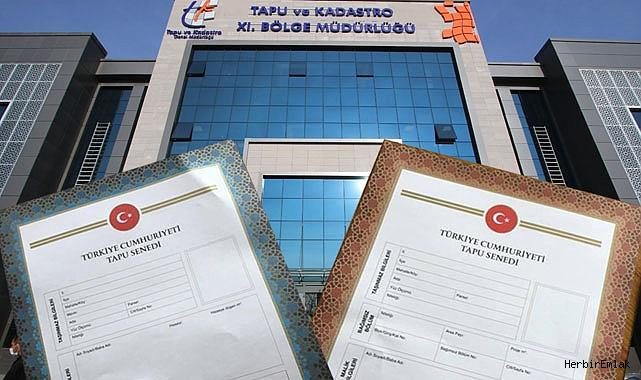
Once the necessary conditions have been fulfilled, the transfer of ownership is registered through the relevant Tapu ve Kadastro authorities. This is the stage at which ownership of the property is officially registered in the buyer's name.
8. Receiving the TAPU and Taking Handover of the Property
After registration, the buyer receives the TAPU confirming ownership of the property. The property and keys are then handed over to the buyer, together with the necessary documents related to the property.